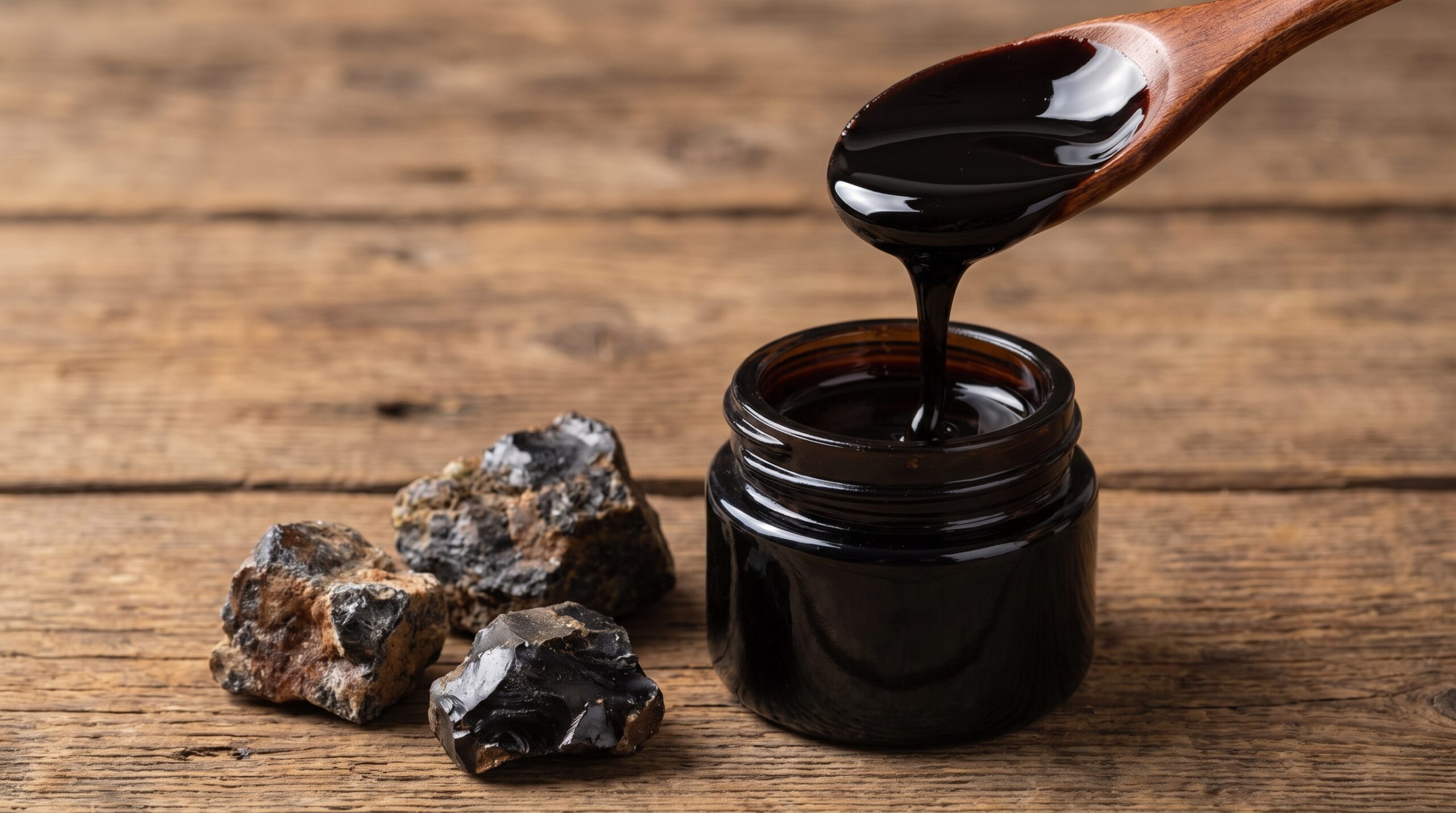
When people talk about Himalayan Shilajit, one compound is mentioned more than any other—Fulvic Acid.
Many brands advertise high Fulvic Acid percentages, but very few explain what Fulvic Acid actually is, where it comes from, and why it has become one of the most researched natural compounds found in authentic Shilajit.
Understanding Fulvic Acid helps you appreciate why genuine Shilajit is far more than just a mineral supplement. It is a naturally occurring organic-mineral complex shaped by centuries of geological and biological processes.
What Is Fulvic Acid?
Fulvic Acid is a naturally occurring organic compound that belongs to a group of substances known as humic substances.
Humic substances are formed during the gradual decomposition of plants and other organic matter by microorganisms over long periods. They are commonly found in healthy soils, compost, peat, freshwater environments, and certain natural substances such as authentic Shilajit.
Unlike vitamins or minerals, Fulvic Acid is an intricate mixture of many small organic molecules rather than a single chemical.
How Does Fulvic Acid Form in Shilajit?
The formation of Fulvic Acid is a slow natural process that can take hundreds of years.
In the Himalayan mountains, layers of vegetation, lichens, mosses, and microbial life gradually decompose under changing temperatures, pressure, moisture, and geological conditions. During this transformation, microorganisms convert complex plant materials into smaller organic compounds.
One result of this long process is the formation of Fulvic Acid, which becomes part of the complex organic matrix of Shilajit.
Why Is Fulvic Acid Important?
Scientists are interested in Fulvic Acid because of its unique chemical structure.
It contains numerous oxygen-containing functional groups that interact with minerals and organic molecules. This characteristic contributes to the overall composition and complexity of authentic Shilajit.
Researchers continue to investigate Fulvic Acid’s physical and chemical properties in laboratory settings, although many aspects are still being studied.
Fulvic Acid Is Only One Part of Shilajit
A common misconception is that Fulvic Acid alone determines Shilajit quality.
In reality, authentic Shilajit contains many naturally occurring components, including:
- Humic substances
- Fulvic Acid
- Dibenzo-α-pyrones
- Amino acids
- Organic acids
- Polyphenols
- Trace minerals
- Plant-derived compounds
The interaction of these naturally occurring substances contributes to the unique profile of authentic Shilajit.
Not necessarily.
Some products promote very high Fulvic Acid percentages as proof of superior quality. However, quality depends on much more than a single number.
Scientists also consider:
- Authentic geographical origin
- Purification methods
- Contaminant testing
- Heavy metal analysis
- Microbiological safety
- Overall chemical composition
- Product stability
A well-produced Shilajit with a balanced natural profile is generally more meaningful than one marketed solely on Fulvic Acid content.
How Do Scientists Measure Fulvic Acid?
Specialized laboratories use validated analytical techniques to estimate Fulvic Acid content.
These may include:
- High-Performance Liquid Chromatography (HPLC)
- Spectrophotometric methods
- Standardized humic substance analysis
Testing helps manufacturers monitor consistency and quality between production batches.
Fulvic Acid and Natural Mineral Complexes
One fascinating property of Fulvic Acid is its ability to associate with naturally occurring minerals within Shilajit’s complex organic matrix.
This contributes to the distinctive composition of authentic Shilajit and is one reason researchers continue to study these natural systems.
Why Does Fulvic Acid Vary?
No two Shilajit samples are chemically identical.
Fulvic Acid levels may differ depending on:
- Geographic location
- Altitude
- Climate
- Vegetation
- Microbial activity
- Geological conditions
- Purification methods
This natural variation is expected and reflects the complexity of Shilajit’s origin.
What Should Consumers Look For?
Instead of focusing only on Fulvic Acid percentage, look for products that provide:
- Transparent sourcing
- Quality testing
- Heavy metal screening
- Microbiological testing
- Appropriate purification
- Batch consistency
These factors provide a more complete picture of product quality.
The Future of Fulvic Acid Research
Interest in Fulvic Acid continues to grow across fields such as soil science, environmental chemistry, agriculture, and natural product research.
Scientists are exploring its chemistry, interactions with minerals, and role within complex natural materials like Shilajit. As research evolves, our understanding of Fulvic Acid is likely to become even more detailed.
Fulvic Acid is one of the defining natural components of authentic Himalayan Shilajit, but it should not be viewed in isolation. Genuine Shilajit is a remarkably complex natural substance created through centuries of biological and geological transformation.
Choosing a quality Shilajit involves looking beyond marketing claims and considering sourcing, purification, laboratory testing, and overall product integrity. By understanding the science behind Fulvic Acid, consumers can make more informed decisions and appreciate the remarkable complexity of this traditional natural material.
Veda Stem- Admin